CASE STUDY · TEXTILE & GARMENT
Taming fiber: how a garment factory
ended its lint and thread trouble
Cotton lint, thread ends and fabric fiber are light, fluffy and everywhere. Brooms spread them,
standard vacuums choke on them. The ENDUSTMAN EHFS-T textile series was built for
exactly this problem.
CLIENT
Shanghai Feihong Garment Factory
CLEANING TARGET
Fine powder in cleanroom areas
PRODUCT USED
EHTS-C Series
KEY STANDARD
HEPA filtration · 0.1 μm
THE CLIENT
800,000
Garments produced per year — every one of them a chance for fiber to cause a complaint.
Material profile: cotton & linen fiber — extremely light, high volume, quick to clog standard filters.
Shanghai Feihong Garment Factory is a mid-size producer of cotton and linen garments, turning out around 800,000 shirts and jackets every year.
In a plant like this, every process — cutting, sewing, finishing, packing — sheds lint, thread ends and fiber. These light scraps drift into folded garments, work their way into sewing machine shafts, and float back onto finished stock.
The result: complaints from buyers about fiber mixed into garments, and machine breakdowns that stopped lines at the worst times.
THE CHALLENGE
They tried two fixes before us. Both failed.
Fiber waste looks simple. It is not. Here is what the factory tried first — and why it did not work.
Brooms
ATTEMPT 01
Sweeping moved the big scraps, but light fiber simply flew back into the air — landing in fabric rolls, finished garments and machine drive shafts. Complaints and breakdowns continued.
✕ FAILED
Standard Vacuum
ATTEMPT 02
Better at first — but fiber is bulky, low-density waste. Even a large tank filled up fast, and the machine had to be emptied many times a day. Daily use became a burden nobody wanted.
✕ FAILED
Final solution – ENDUSTMAN
THE FIX
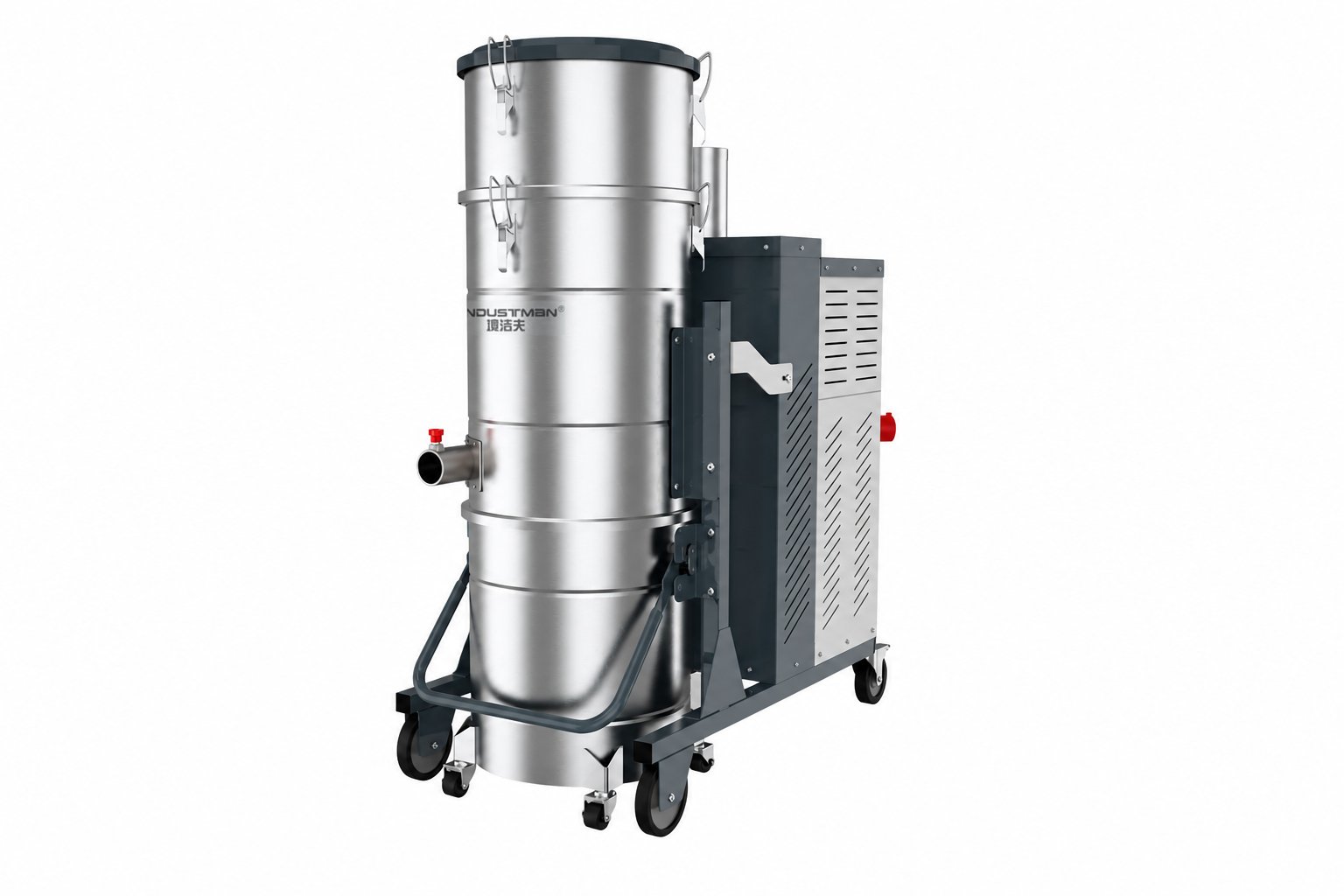
A vacuum engineered for fiber: air enters from the top, waste drops down and compresses into a large filter bag. More fiber per bag, far fewer stops to empty.
✓ WORKING SINCE 2023
THE SOLUTION
EHFS-T series — the vacuum that thinks like fiber
The idea came from a simple observation: when people pack fiber waste, they press it down to save space. So why not make the vacuum do the same?
We reversed the usual airflow. The suction inlet sits on top and the exhaust at the bottom, so fiber falls downward as it arrives — and compresses itself on the way. A large non-woven bag holds the load, so emptying is fast and clean.
Narrow-aisle ready: the body is shaped for the tight rows between sewing lines — built for textile, garment, paper and packaging plants.
PRODUCTS USED
MODEL | IMAGE | POSITION | CAPACITY | POWER |
|---|---|---|---|---|
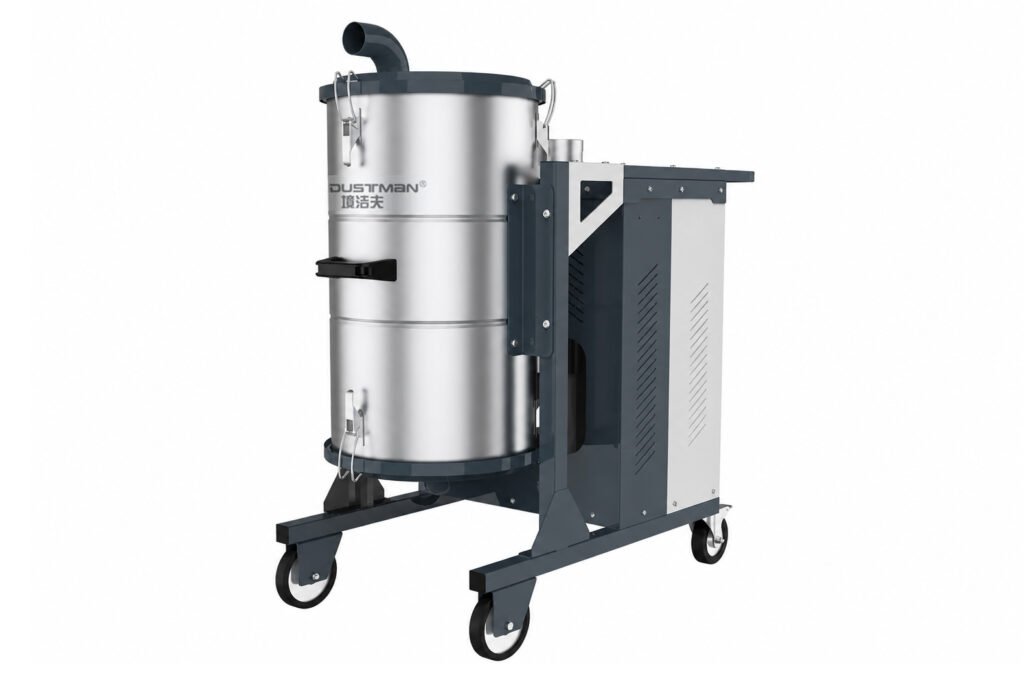 | Small workshops | 80 L | 2.2 KW | |
| Single production lines | 80 L | 3 KW | |
| Multi-line areas | 80 L | 4 KW | |
| Large workshops | 80 L | 5.5 KW | |
| Whole-plant coverage | 80 L | 7.5 KW |
SHARED SPECIFICATION | |
|---|---|
Airflow design | Top inlet · bottom exhaust |
Collection | Large non-woven filter bag |
Motor | Side-channel blower · 24 h duty |
“Since we brought in the ENDUSTMAN textile vacuum in 2023, the fiber trouble is simply gone.”
CASE SUMMARY · SHANGHAI FEIHONG GARMENT FACTORY
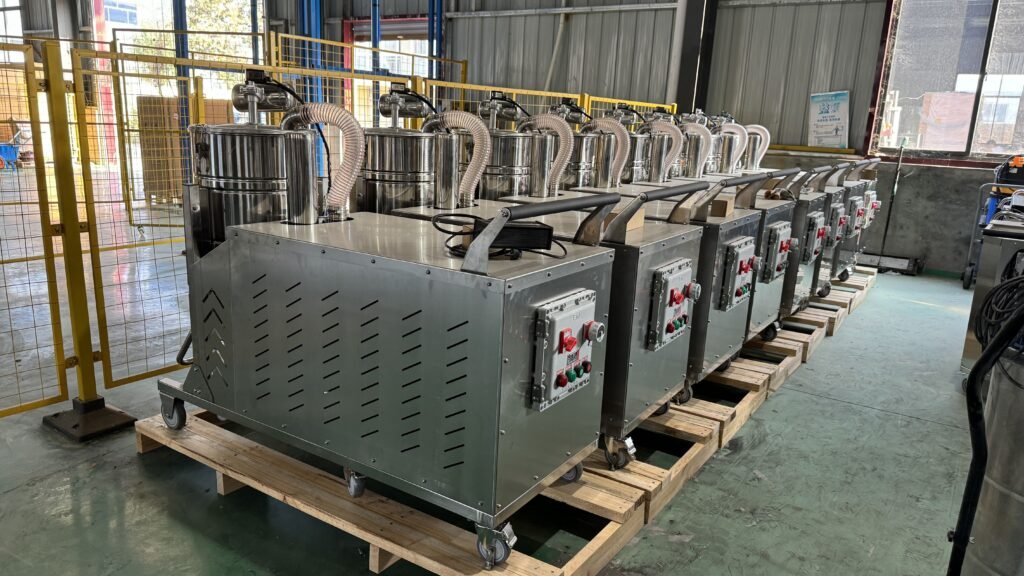
OEM / ODM SERVICE
Need this machine with your brand on it?
Every ENDUSTMAN model can be built to your specification: voltage, plug, color, logo, filtration level and document language. Distributor pricing and spare-parts kits available for partners.
RELATED PRODUCTS
More Professional-Grade Machine Option
- EEFD16DEEFD16D Ride-On Battery Industrial Vacuum Cleaner 700mm Cleaning WidthENDUSTMAN EEFD16D is a ride-on battery vacuum for very large floors, combining a 700mm suction path with a 100L tank and 3-4 hours of cordless runtime per charge.
- EEFD28PEEFD28P Battery Powered Industrial Vacuum Cleaner 120L with 70CM Push SqueegeeENDUSTMAN EEFD28P is a 120L cordless industrial vacuum with a 70cm push squeegee and pre-separator, running 2-4 hours per charge for large-area workshop cleaning without power cords.
- EEFD30EEFD30 Custom 3000W Battery Powered Industrial Vacuum Cleaner 100LENDUSTMAN EEFD30 is a custom 3000W cordless industrial vacuum with six brushless motors, a 100L tank, and a pre-separator, built for demanding wireless cleaning jobs.
 EHFD250XMEHFD250XM Three Phase Pulse Jet Self-Cleaning Industrial Vacuum Cleaner with External Air SupplyENDUSTMAN EHFD250XM combines 25000W suction with automatic pulse-jet filter cleaning driven by on-site compressed air. Three PTFE filters stay clean without manual work — ideal for fine dust in continuous production.
- EHFD200XMEHFD200XM Three Phase Pulse Jet Self-Cleaning Industrial Vacuum Cleaner with External Air SupplyENDUSTMAN EHFD200XM combines 20000W suction with automatic pulse-jet filter cleaning driven by on-site compressed air. Three PTFE filters stay clean without manual work — ideal for fine dust in continuous production.
- EHFD150XMEHFD150XM Three Phase Pulse Jet Self-Cleaning Industrial Vacuum Cleaner with External Air SupplyENDUSTMAN EHFD150XM combines 15000W suction with automatic pulse-jet filter cleaning driven by on-site compressed air. Three PTFE filters stay clean without manual work — ideal for fine dust in continuous production.
- EHFD130XMEHFD130XM Three Phase Pulse Jet Self-Cleaning Industrial Vacuum Cleaner with External Air SupplyENDUSTMAN EHFD130XM combines 13000W suction with automatic pulse-jet filter cleaning driven by on-site compressed air. Three PTFE filters stay clean without manual work — ideal for fine dust in continuous production.
- EHFD110XMEHFD110XM Three Phase Pulse Jet Self-Cleaning Industrial Vacuum Cleaner with External Air SupplyENDUSTMAN EHFD110XM combines 11000W suction with automatic pulse-jet filter cleaning driven by on-site compressed air. Three PTFE filters stay clean without manual work — ideal for fine dust in continuous production.
- EHFD75XMEHFD75XM Three Phase Pulse Jet Self-Cleaning Industrial Vacuum Cleaner with External Air SupplyENDUSTMAN EHFD75XM combines 7500W suction with automatic pulse-jet filter cleaning driven by on-site compressed air. Three PTFE filters stay clean without manual work — ideal for fine dust in continuous production.
YOUR PLANT COULD BE THE NEXT CASE STUDY